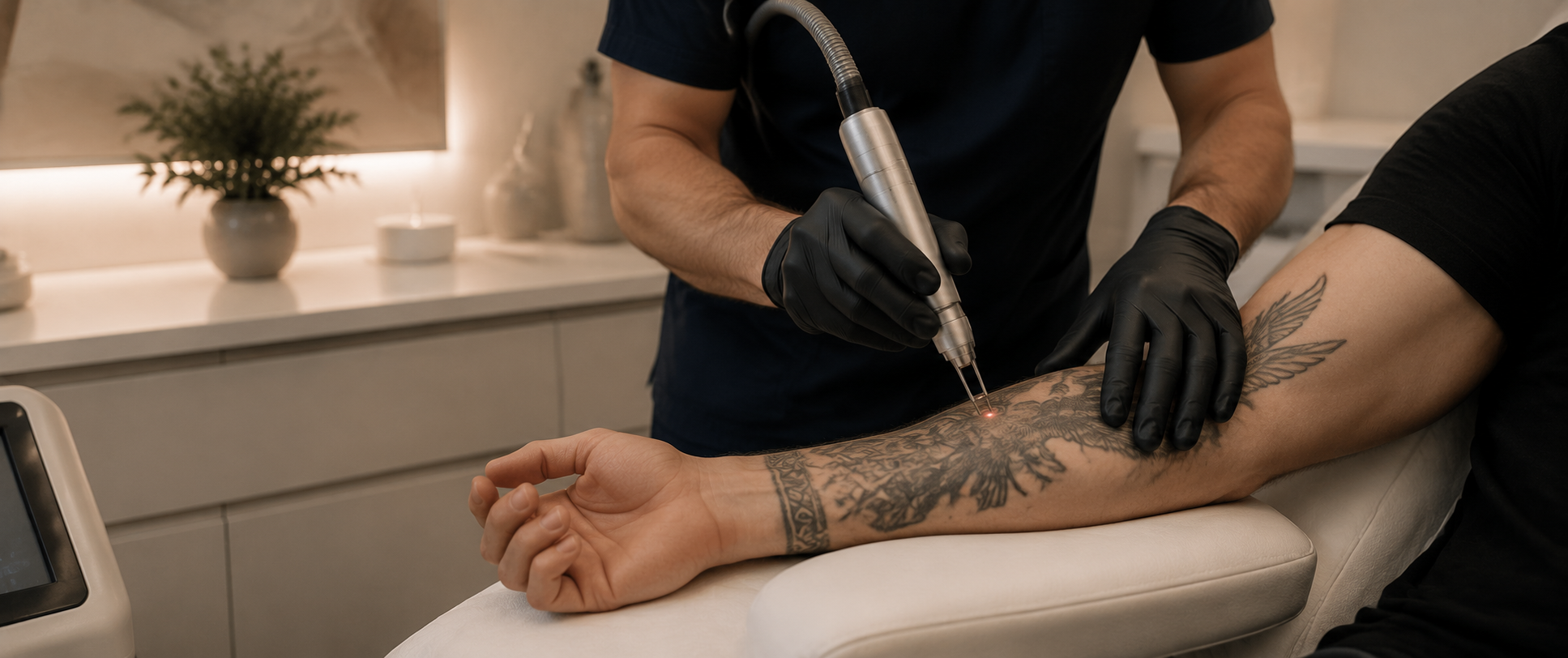
Laser tattoo removal uses targeted light energy to break down tattoo ink particles in the skin. These smaller particles are then gradually cleared by the body’s natural processes.
Different wavelengths are used to target different ink colours, allowing for progressive fading over a series of treatments.
Complete removal is possible in some cases, but most tattoos require multiple sessions and may fade rather than disappear entirely.

Unwanted or outdated tattoos
Poorly executed tattoos
Fading tattoos for cover-up work
Patients seeking gradual, controlled removal
Face and neck
Arms and hands
Chest and back
Legs
Most areas of the body can be treated, although healing time may vary depending on the location.

Tattoo removal is a gradual process, typically requiring multiple sessions spaced several weeks apart.
Step 1: Assessment
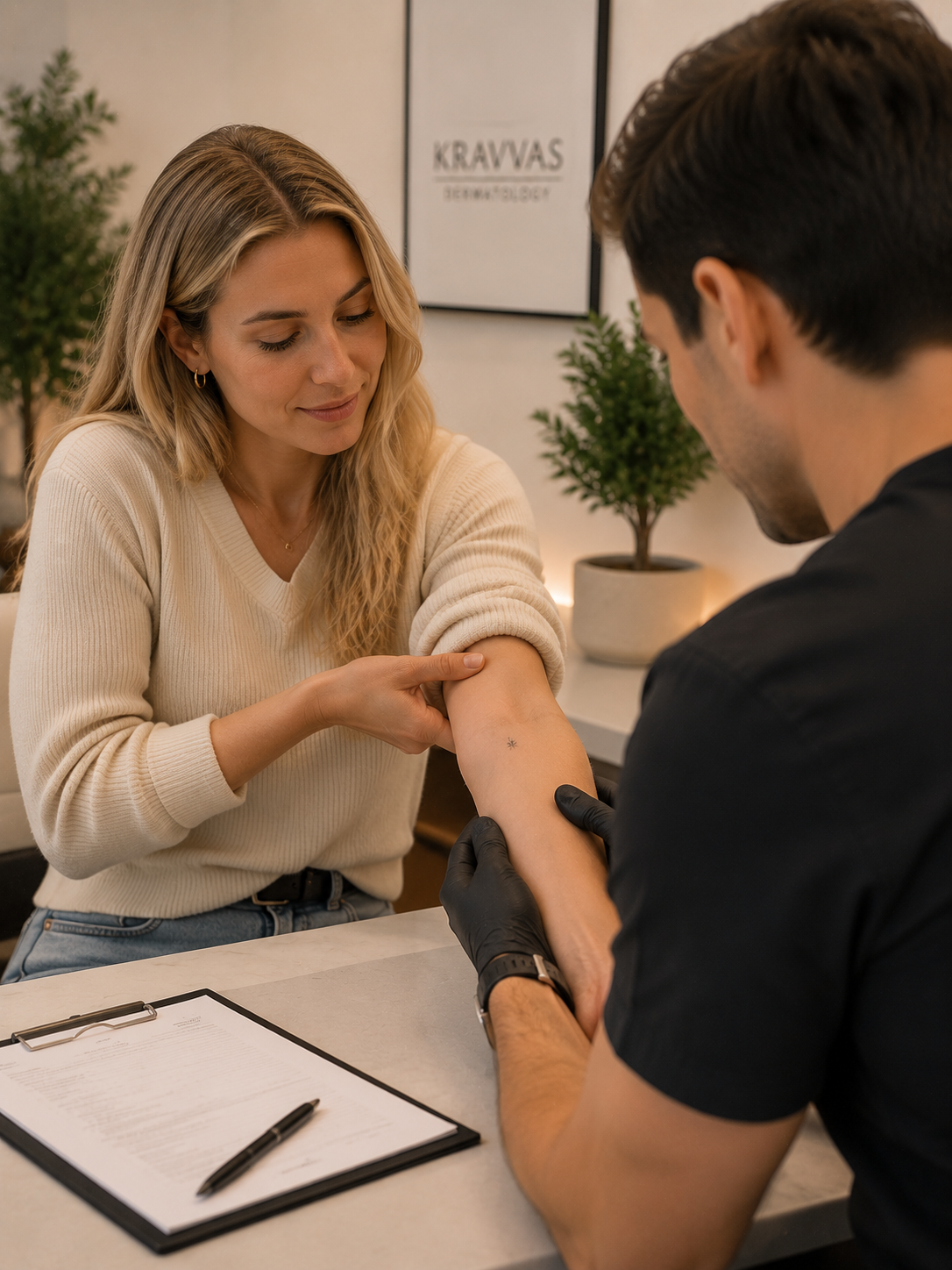
Dr. Kravvas will assess the tattoo’s size, colour, depth, and age to estimate the number of sessions required.
Step 2: Treatment
A medical-grade laser is used to deliver short pulses of energy to the tattoo. The sensation is often described as similar to a snapping elastic band. Cooling methods or numbing options may be used to improve comfort.
Step 3: Aftercare & Results
The treated area may appear red, swollen, or slightly blistered initially. Healing usually takes 1–2 weeks.
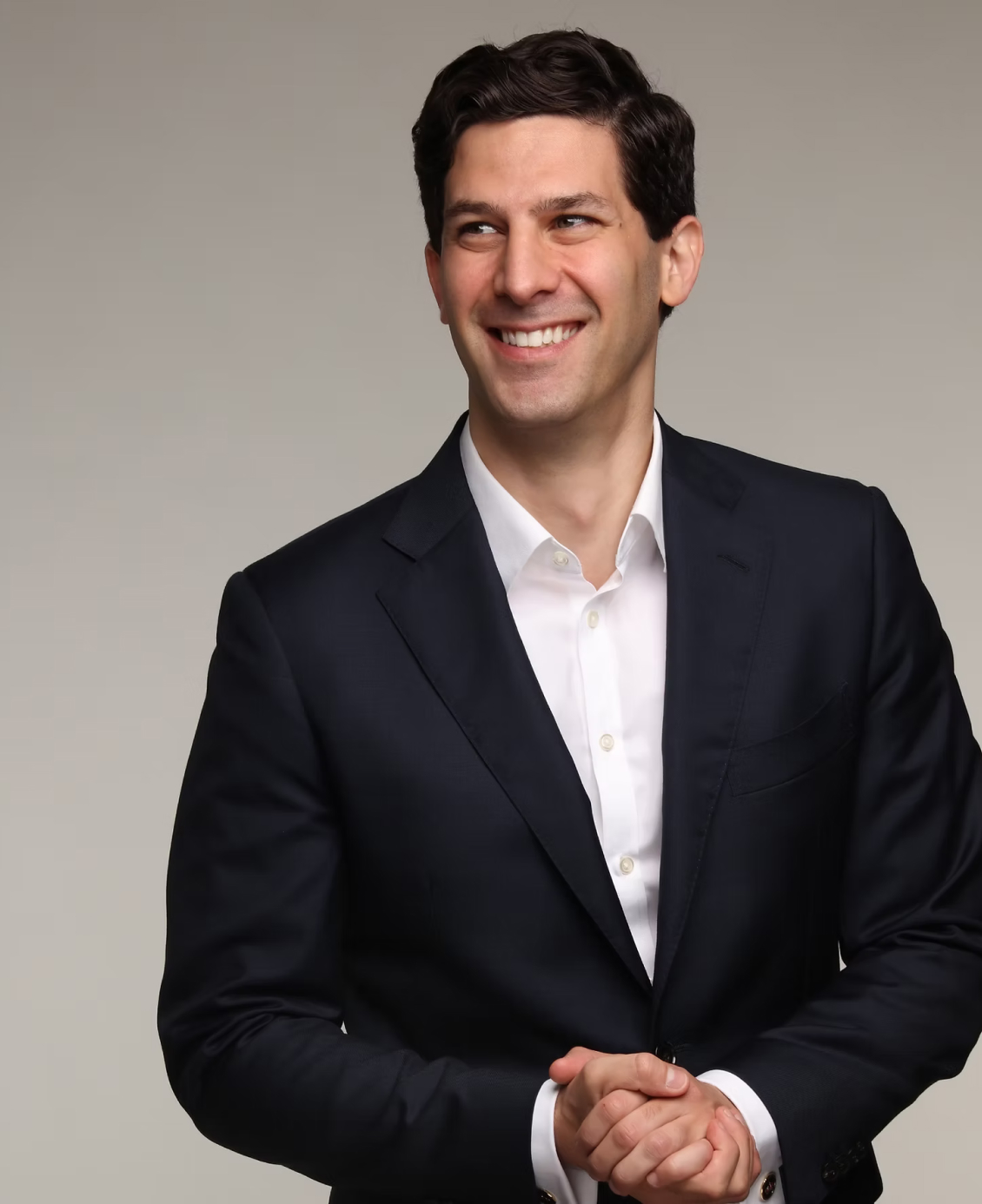
Dr. George Kravvas is a consultant dermatologist and published academic with a special interest in acne, rosacea, and acne scarring. His clinical approach combines medical expertise with cutting-edge technology to achieve consistently high standards of care.
Whether your acne is mild, moderate, or severe — Dr. Kravvas will provide clarity, confidence, and a plan tailored to you.
Most tattoos require between 6–10 sessions, sometimes more. The exact number depends on factors such as ink colour, depth, age of the tattoo, and skin type.
It can be uncomfortable, often described as similar to an elastic band snapping against the skin. Numbing creams and cooling techniques can help reduce discomfort.
Darker colours like black are usually easier to treat. Colours such as green, blue, and yellow can be more resistant and may require more sessions.
When performed correctly, the risk of scarring is low. Following aftercare instructions is important to minimise complications.
Treatment courses typically take several months, as sessions are spaced out to allow proper healing and ink clearance between treatments.