
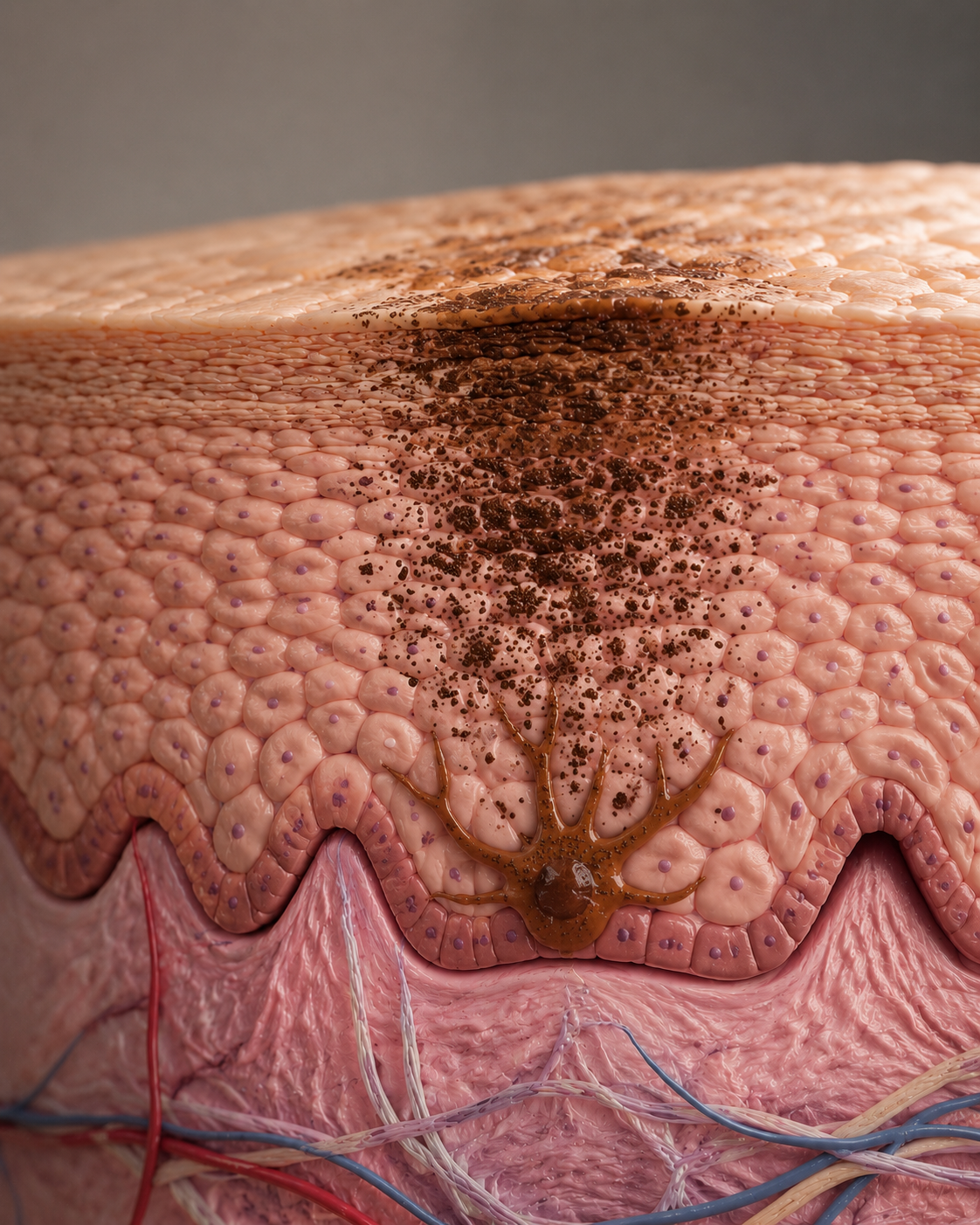
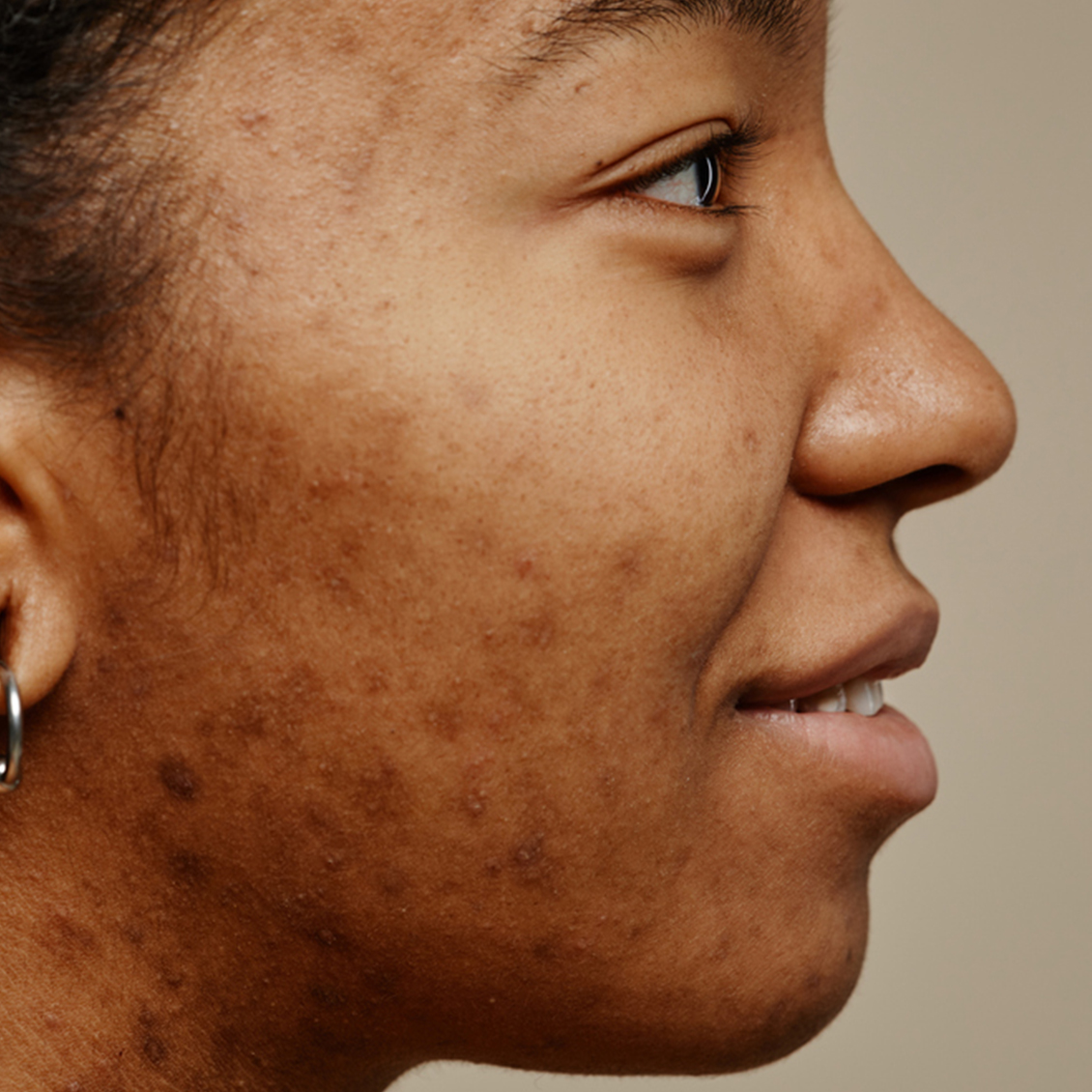
Melasma is a common skin condition that causes patchy, brown or grey pigmentation, usually on the face. It often affects the cheeks, forehead, upper lip, and jawline.
It is typically triggered by a combination of hormonal factors and sun exposure, which makes it more complex than standard pigmentation.
Melasma cannot always be permanently removed, but it can be effectively managed with the right combination of treatments and long-term skin care.

Melasma is a common, long-term pigmentation condition that causes brown or grey-brown patches, usually on the cheeks, forehead, upper lip and chin. It is driven by a combination of sun and visible light exposure, hormones (including pregnancy and the contraceptive pill) and genetics, and is more common in women and in medium to darker skin types.
Patchy facial pigmentation
Hormonal pigmentation (e.g. pregnancy-related or contraceptive-related)
Uneven skin tone resistant to over-the-counter treatments
Cheeks
Forehead
Upper lip
Jawline
Melasma requires a careful, tailored approach to avoid worsening pigmentation.
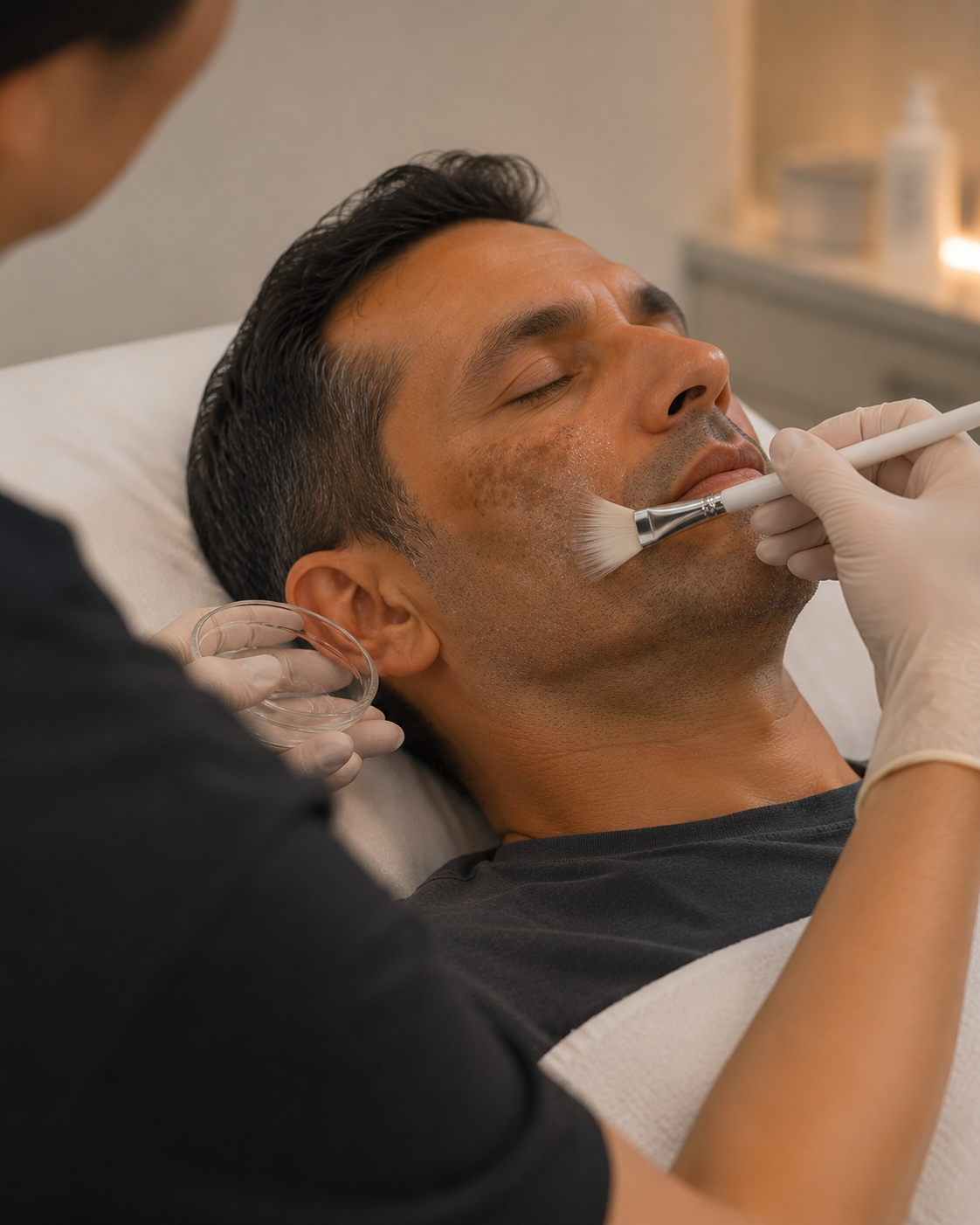
Treatment usually involves a combination approach rather than a single procedure.
Step 1: Assessment
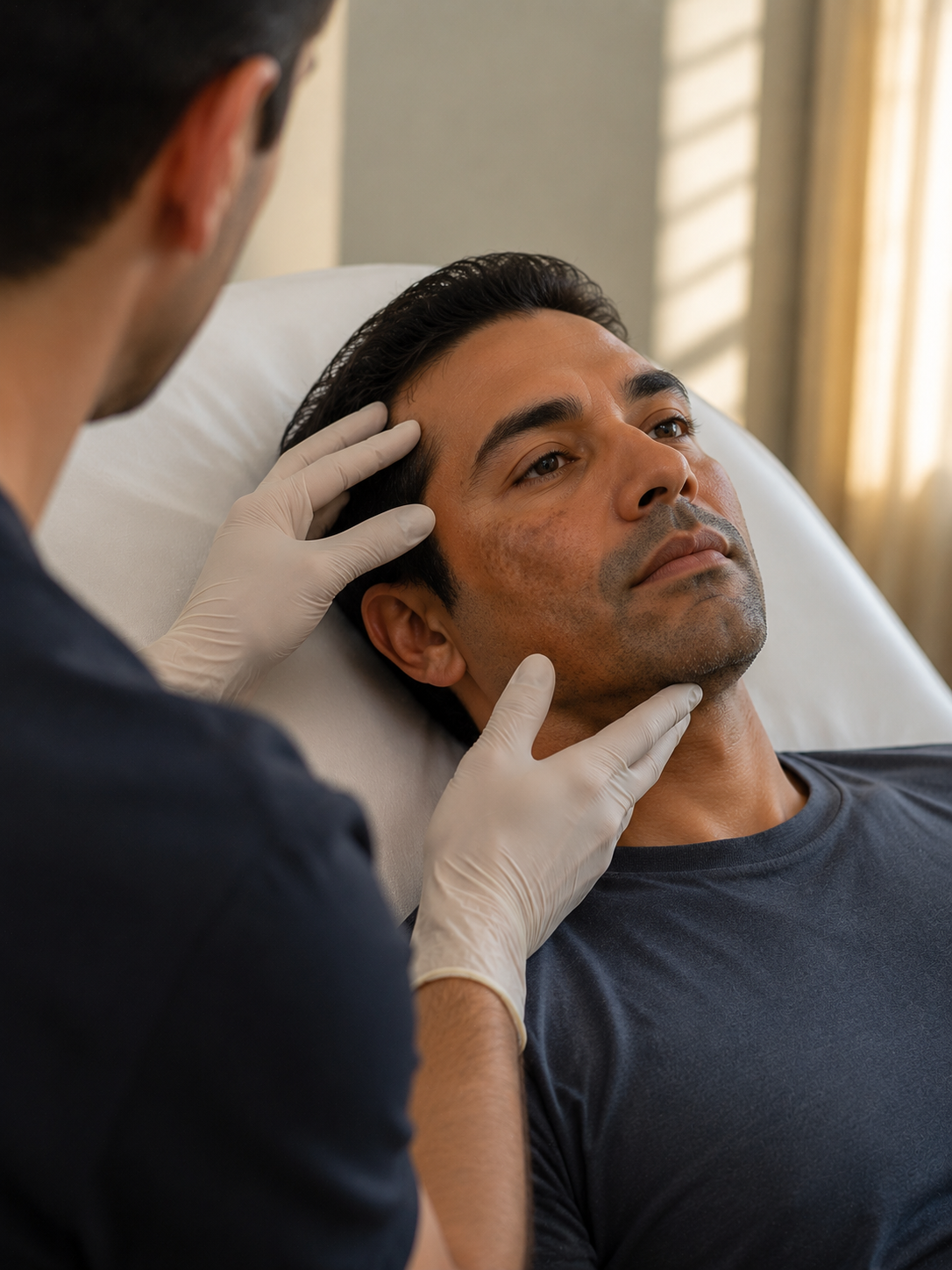
Dr. Kravvas will assess the type and depth of pigmentation, as well as potential triggers such as sun exposure or hormonal factors.
Step 2: Treatment Plan
Treatment may include prescription topical therapies, chemical peels, and carefully selected laser treatments where appropriate.
Step 3: Ongoing Management
Melasma often requires maintenance. Strict sun protection and ongoing skincare are essential to control recurrence.
Melasma cannot be cured permanently, but with the right combination of treatments it can be significantly lightened and kept under control. Dr. Kravvas uses a careful, stepwise approach, because overly aggressive treatment can make melasma worse.
Prescription lightening creams
Oral tranexamic acid, where suitable
Medical-grade chemical peels
Carefully selected low-energy laser treatments
Prescription lightening creams and, where suitable, oral tranexamic acid are the foundation of melasma care. They reduce pigment production and help keep patches from returning.
Carefully selected medical-grade peels and low-energy laser treatments can further improve stubborn patches when combined with topical therapy and strict sun protection.
Dr. Kravvas will recommend the safest and most effective combination for your skin type and the pattern of your melasma.

Every plan starts with a detailed skin assessment to confirm the diagnosis and identify your triggers. Dr. Kravvas then builds a long-term plan that combines prescription treatments, in-clinic procedures where helpful, and daily protection against sun and visible light, with regular reviews to keep your results stable.
Good preparation and consistent aftercare are especially important with melasma, as pigment can return quickly without them.

Dr. George Kravvas is a consultant dermatologist and published academic. Melasma is one of the most challenging pigmentation conditions to treat, and it needs medical expertise to avoid the irritation and rebound pigmentation that aggressive treatments can cause.
Whether your melasma is new or has been present for years, Dr. Kravvas will provide clarity, confidence and a realistic long-term plan tailored to you.
Not always. Melasma is a chronic condition that can be controlled and improved, but it may return, especially with sun exposure or hormonal changes.
There is no single best treatment. A combination of topical treatments, chemical peels, and sometimes laser therapy is usually the most effective approach.
It can help in selected cases, but it must be used carefully. Incorrect laser settings can worsen melasma, which is why expert assessment is important.
Improvement is gradual and typically takes several weeks to months, depending on the severity and treatment plan.
Yes. Melasma is prone to recurrence, particularly with sun exposure. Daily use of high SPF and ongoing maintenance are essential.