
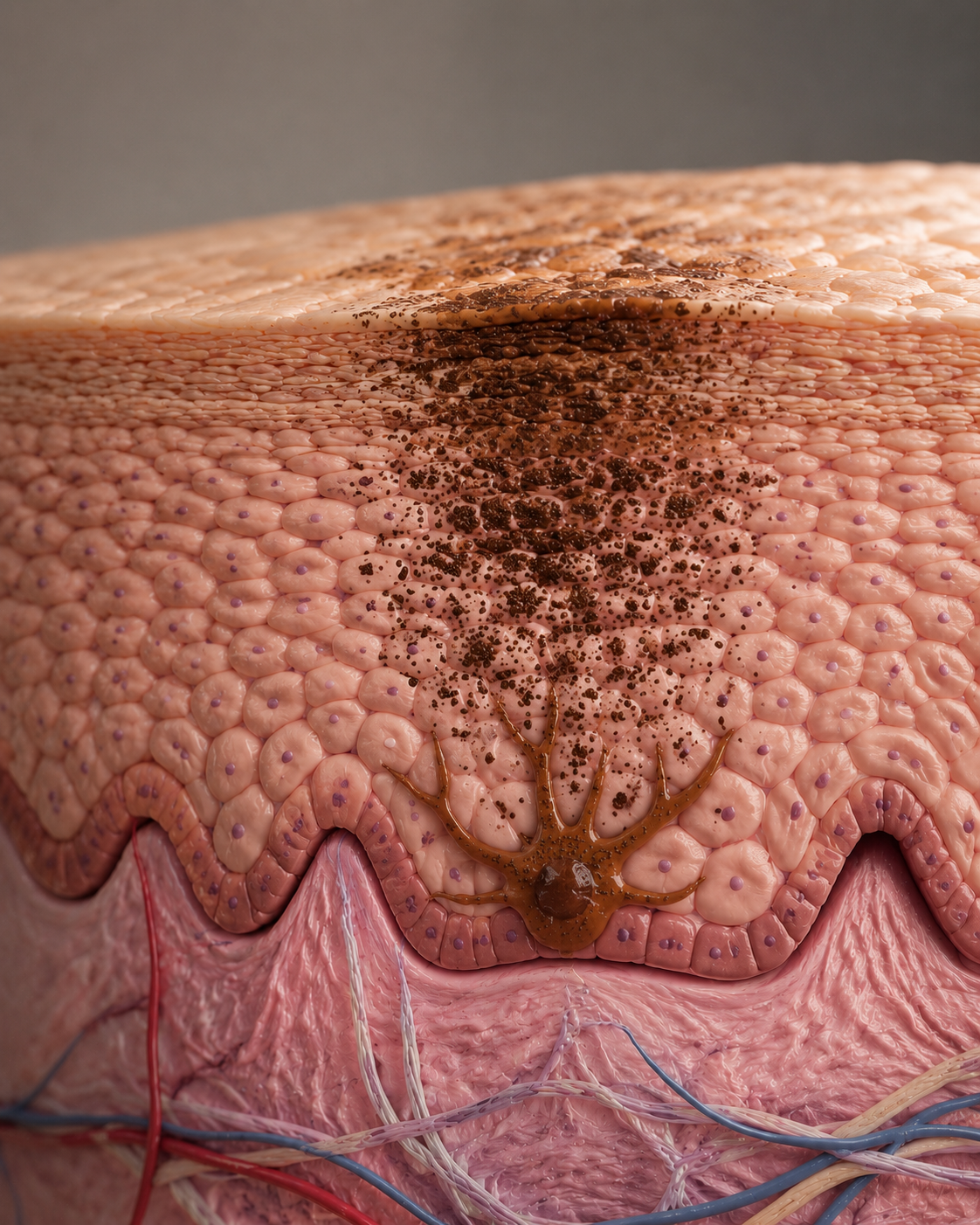
Melasma is a common skin condition that causes patchy, brown or grey pigmentation, usually on the face. It often affects the cheeks, forehead, upper lip, and jawline.
It is typically triggered by a combination of hormonal factors and sun exposure, which makes it more complex than standard pigmentation.
Melasma cannot always be permanently removed, but it can be effectively managed with the right combination of treatments and long-term skin care.
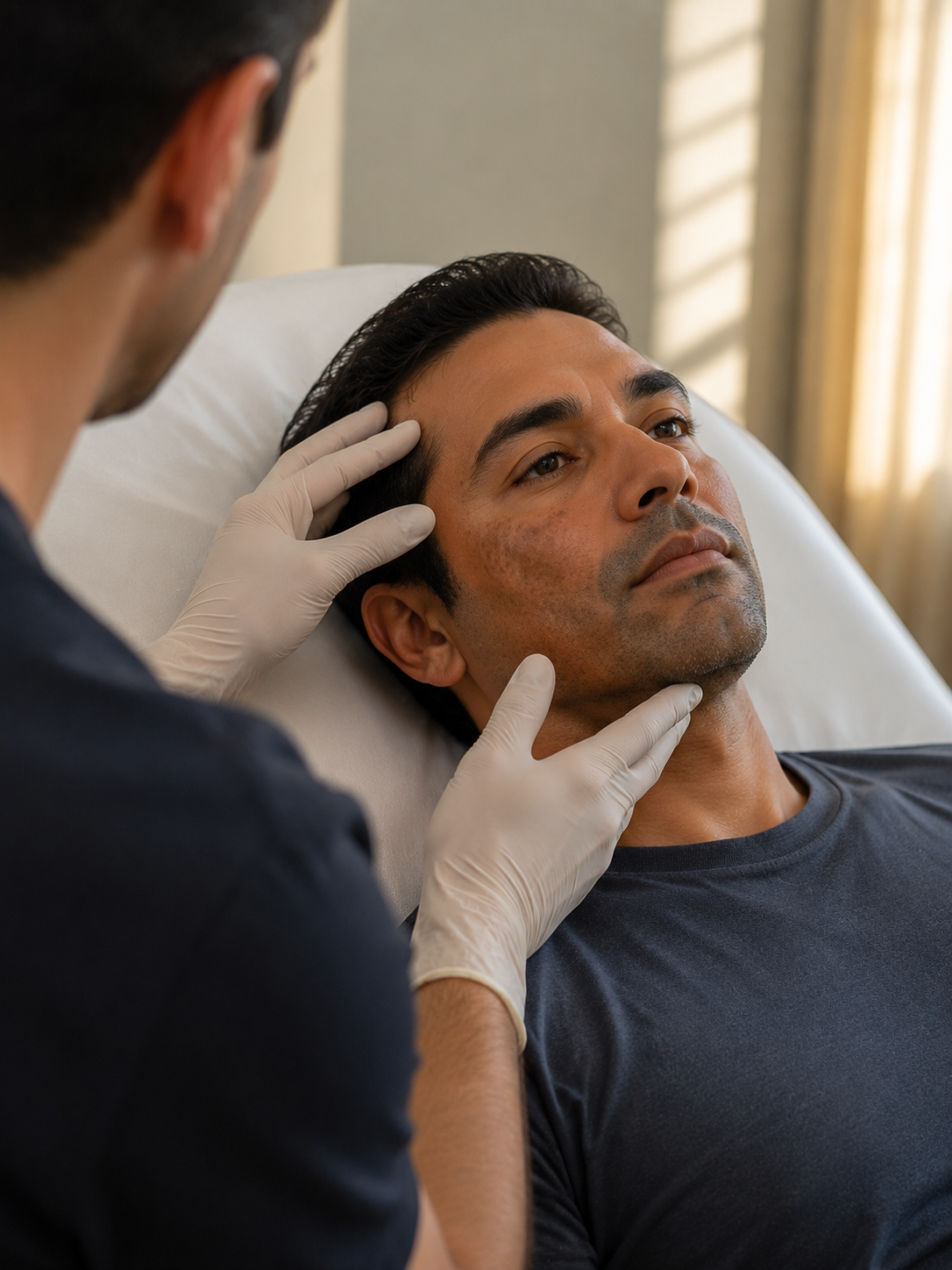
Patchy facial pigmentation
Hormonal pigmentation (e.g. pregnancy-related or contraceptive-related)
Uneven skin tone resistant to over-the-counter treatments
Cheeks
Forehead
Upper lip
Jawline
Melasma requires a careful, tailored approach to avoid worsening pigmentation.
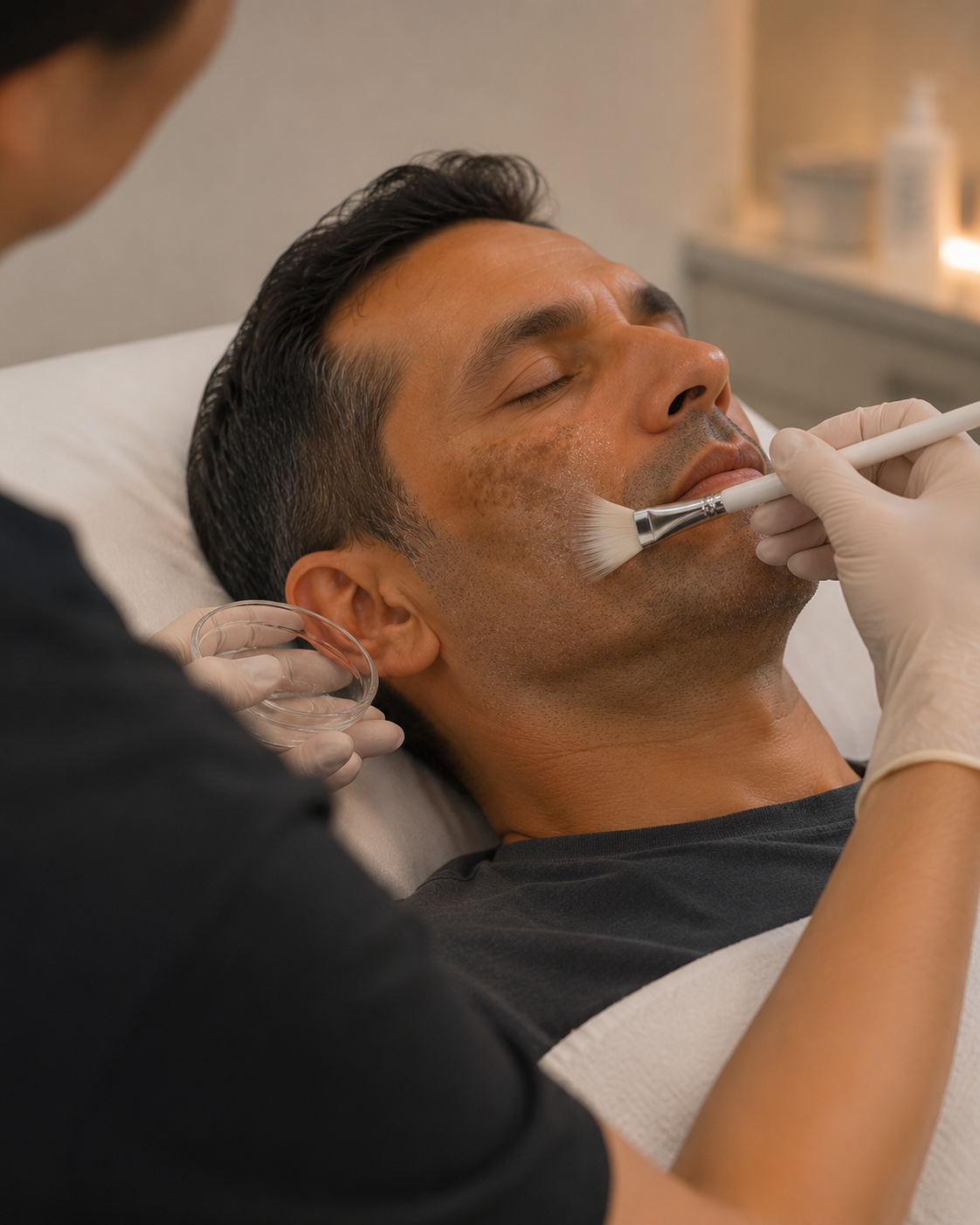
Treatment usually involves a combination approach rather than a single procedure.
Step 1: Assessment
Dr. Kravvas will assess the type and depth of pigmentation, as well as potential triggers such as sun exposure or hormonal factors.
Step 2: Treatment Plan
Treatment may include prescription topical therapies, chemical peels, and carefully selected laser treatments where appropriate.
Step 3: Ongoing Management
Melasma often requires maintenance. Strict sun protection and ongoing skincare are essential to control recurrence.

Dr. George Kravvas is a consultant dermatologist and published academic with a special interest in acne, rosacea, and acne scarring. His clinical approach combines medical expertise with cutting-edge technology to achieve consistently high standards of care.
Whether your acne is mild, moderate, or severe — Dr. Kravvas will provide clarity, confidence, and a plan tailored to you.
Not always. Melasma is a chronic condition that can be controlled and improved, but it may return, especially with sun exposure or hormonal changes.
There is no single best treatment. A combination of topical treatments, chemical peels, and sometimes laser therapy is usually the most effective approach.
It can help in selected cases, but it must be used carefully. Incorrect laser settings can worsen melasma, which is why expert assessment is important.
Improvement is gradual and typically takes several weeks to months, depending on the severity and treatment plan.
Yes. Melasma is prone to recurrence, particularly with sun exposure. Daily use of high SPF and ongoing maintenance are essential.